
Certainly! You might have come across the term ‘Karma’ while browsing social media, or perhaps you’ve heard or used it when witnessing someone facing life’s challenges. Many online resources offer explanations of what Karma and Karma Yoga mean, each presenting different viewpoints. Then how can we attain the perfect information regarding this? The perfect truth can only be known from the Supreme Person, Lord Krishna Himself. In the Bhagavad Gita, Lord Krishna expounds on the meaning of Karma, its types and Karma Yoga.
In this article, we will delve deeper into these concepts, drawing insights from the teachings of world-renowned yoga spiritual master Jagad Guru Siddhaswarupananda Paramahamsa & the author of the Bhagavad Gita As It Is, His Divine Grace Srila A.C. Bhaktivedanta Swami Prabhupada. Jagad Guru is a disciple of Srila Bhaktivedanta Swami who comes in the disciplic succession known as the Brahma Madhva Gaudiya Sampradaya.
What is Karma?
“Karma” is a Sanskrit word that means “action.” It refers to everything we do in our daily lives, whether good or bad—it’s all considered karma. Interestingly, every action we take sows a seed that will eventually grow into consequences for our future. If we do something positive or good for others, it usually leads to a favourable outcome. On the flip side, if our actions bring suffering to others, we will face difficulties or challenges.
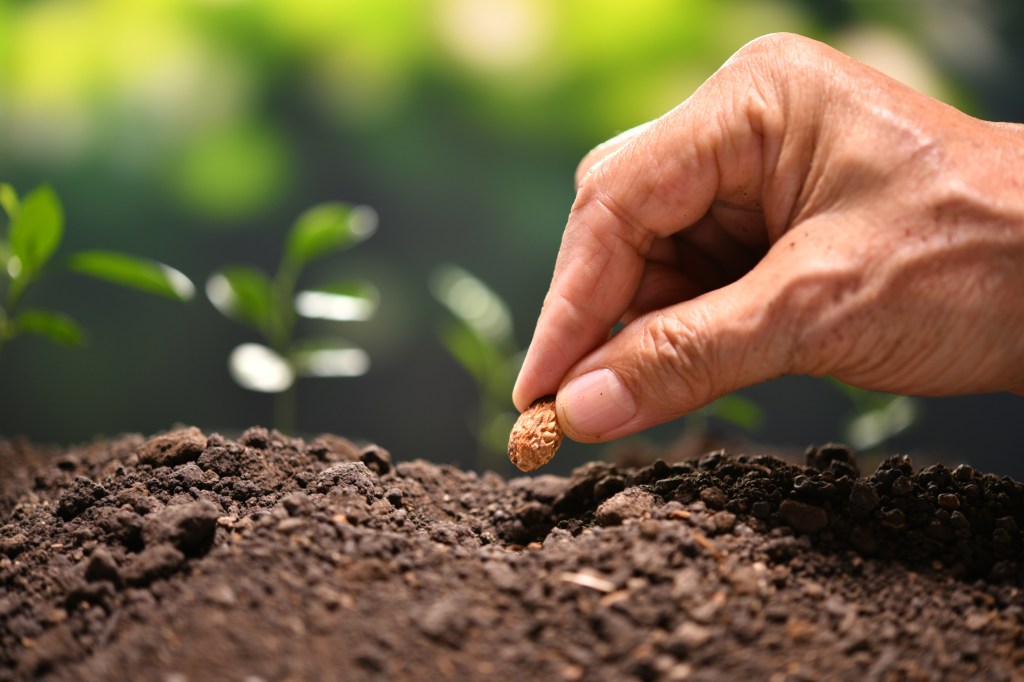
As said by the Lord Jesus Christ in The Holy Bible:
“As you sow, so shall you reap”.
In a nutshell, the idea of karma teaches us that our actions shape our future experiences.
According to the Bhagavad Gita, there are three types of karma.
- Karma – Fruitive Actions
- Vikarma – Forbidden Actions
- Akarma or Karma Yoga – Actions without Fruitive Reactions
Karma – Fruitive Actions:
Karma, or fruitive actions, involves performing actions with an intent to enjoy the outcome. It is also regarded as good karma. Individuals engage in pious activities or good karma, intending to enjoy the resulting benefits personally.

For instance, consider someone who opens an organization to help people in need or feed the needy. If this act is performed with the desire for recognition, honour in society, or to get medals from the government, it is categorized as a fruitive action. The performer of such acts will experience heavenly delights after departing from the earthly realm, enjoying the fruits of their pious actions for a specific duration until their accumulated good karma is exhausted.
Heavenly planets, described in scriptures like Srimad Bhagavatam, are depicted as realms abundant in material pleasures. In contrast to Earth, these planets offer greater material enjoyment and lesser material suffering. This perspective underscores the notion that engaging in welfare actions can lead to enjoyable outcomes not only in the present life but also in the future and realms beyond.
Vikarma – Forbidden Actions:
Vikarma, also known as Forbidden Actions or Bad Karma, includes actions that not only harm others but also bring negative consequences to the person doing them. These consequences can be so serious that the person will suffer in hellish realms. For example, if someone makes others suffer in this life, they will experience similar suffering in this life and even after death. It means they’ll go through a difficult time in a hellish dimension until they’ve paid for all their wrongdoings.

Activities like stealing, plundering others’ properties, or killing a living entity for personal gain are considered bad karma. These actions cause significant suffering to the victims, and the wrongdoers will have to face legal consequences from the state administration. Even if they escape the state laws, the laws of nature, which are strict and unavoidable, will catch up with them. No one can avoid the consequences set by the laws of material nature. Individuals engaged in bad karma will experience suffering in hellish realms until they’ve balanced out their accumulated negative karma. These hellish planets are described in the ancient scripture – Srimad Bhagavatam, particularly in Canto 5, Chapter 26.
Whether we realize it or not, the outcomes of our actions, especially those causing pain to others, will eventually catch up with us. It’s like planting seeds of suffering that grow into thorns we must endure. Even if human laws don’t punish such actions, the laws of nature will undoubtedly hold us responsible. Therefore, it’s crucial to be mindful of our actions and their potential impact on others to avoid the pitfalls of Vikarma.
Before we come to know about “Akarma”, let us see how both Karma and Vikarma play a significant role in our lives.
Karma Guides the Eternal Cycle of Birth & Death
As we’ve explored the concepts of both good and bad karma, it might seem logical to always strive for pious actions. However, according to the wisdom of yoga, it recommends avoiding both good and bad karma because both contribute to reincarnation, which is the leading cause of suffering for all living entities. Consider good karma as credit and bad karma as debt. Each person accumulates a specific amount of debt or credit based on their actions in life.
More details about Karma & Reincarnation can be found in this enlightening video by Jagad Guru Siddhaswarupananda.
Regardless of whether we perform good or bad karma, reactions accumulated from those are inevitable. We undergo various kinds of material pleasures and pains as per our actions. But these pains and pleasures only pertain to our material bodies. Our true identity is we are spirit souls residing inside these material bodies. Due to illusion, we identify ourselves with our bodies. In the present condition, we are inhabiting a body, undergoing specific pains and pleasures based on our past actions. This body, which we are presently using, feels pain and pleasure, but it’s essential to understand that we, the spirit soul, are distinct from it.
Position of Spirit Soul in the Material World
In the material world, the spirit soul is covered by two layers. The outer layer is the gross material body, comprised of five elements—Earth, water, air, fire, and sky. This body holds the five senses, through which the spirit soul experiences material pleasures and pains. Inside the gross material body, there’s a subtle body, which comprises the mind, false ego, and intelligence. The gross body acts as a tool for the spirit soul to engage in material sense gratification, while all desires and emotions are contained within the subtle material body.
The living being inhabiting the subtle body develops various desires for material enjoyment. However, the spirit soul isn’t alone in the subtle body. An expansion of the Supreme Person, known as Paramatma or Lord in the heart, resides alongside the spirit soul, constantly observing him. Picture two birds on a tree branch: one is experiencing the fruits of its past actions (Jiva Atma), and the other is simply watching (Paramatma).

Image Courtesy: https://asitis.com/
When someone dies, the soul departs from the gross material body but remains inside the subtle material body. Even after death, the person’s desires persist, which are observed by Paramatma. Subsequently, based on the individual’s karma and desires, Paramatma provides another material body to the spirit soul to fulfill its desires. This process perpetuates the cycle of birth and death.
Relation Between Karma & Material Bodies
The way karmic reactions work is that both supposed good and bad karma leads to the individuals taking on another material body. As long as stored karmic reactions are waiting, a person needs a material body for those reactions to experience. Whether the outcomes are positive or negative, a person needs a physical form (material body) to experience the results of their actions. Without a material body, the spirit soul cannot undergo karmic reactions.

Image Courtesy: https://asitis.com/
Those aiming to come out of the cycle of karma – want to avoid being reborn. They wish to skip the experiences linked to both good and bad actions. While many try to accumulate good karma, a wise person seeks freedom from all kinds of karmic reactions. This is because our material bodies inherently bring both pain and pleasure. As spirit souls, we crave eternal spiritual happiness. The joy we get from satisfying our senses doesn’t truly satisfy our souls. Since we are essentially spiritual beings, we need spiritual happiness to be really happy. However, currently, we are in these material bodies and get involved in various activities, regardless of their moral nature.
So, what is the right path to get out of this cycle of karma?
Inactivity Is Not Feasible
Some people might believe that if we stop doing everything and sit without taking any actions, we won’t face any consequences, and we can break free from the cycle of karma. However, the notion of stopping all activities to avoid karma and escape reincarnation is not practical or feasible.

Lord Krishna says in the Bhagavad Gita:
Not by merely abstaining from work can one achieve freedom from
reaction, nor by renunciation alone can one attain perfection.All men are forced to act helplessly according to the impulses born of
Bhagavad Gita : 3.4 – 5
the modes of material nature; therefore no one can refrain from doing
something, not even for a moment.
In these verses, Lord Krishna emphasizes that refraining from work or renouncing action alone is not a practical solution for escaping karmic reactions. The soul’s nature is inherently active, and complete inactivity is impossible as long as the soul resides within the body. The soul is perpetually active, and even a momentary cessation of activity is unattainable.
Srila A.C. Bhaktivedanta Swami, in his commentary on these verses, clarifies:
“It is not a question of embodied life, but it is the nature of the soul to
be always active. Without the presence of the spirit soul, the material body
cannot move. The body is only a dead vehicle to be worked by the spirit
soul, which is always active and cannot stop even for a moment.”
By nature, the spirit soul is active, and this perpetual activeness is intrinsic to the soul. As long as we exist in these physical bodies within the material world, we will inevitably keep performing actions. The question arises: If we can’t stop ourselves from doing actions, how can we truly break free from the cycle of karmic reactions? Here comes the 3rd type of Karma – “Akarma”.
Akarma or Karma Yoga – Actions without Fruitive Reactions
There is a way to break free from the cycle of karma and attain a state where there are no reactions to our actions. This is known as Akarma or Actions without Fruitive Reactions. If someone performs all their actions without a desire for personal pleasure but as an offering to the Supreme Person or God, they become free from all reactions to their actions. This practice is also referred to as ‘Karma Yoga‘.
‘Karma’ means action, and ‘Yoga’ means connection with God. Therefore, Karma Yoga means performing actions in connection with God. It is the only way to escape the cycle of karmic reactions. When a person does his duty out of love for the Supreme Lord and doesn’t desire to enjoy the results of his actions, that is called action in God Consciousness. In this approach, the person acknowledges that God is the ultimate enjoyer of everything. As a result, they carry out their responsibilities without attachment to the outcomes, dedicating whatever results they achieve to God. Through this process, one breaks free from the cycle of karmic reactions and situates oneself in the transcendental loving service to God.
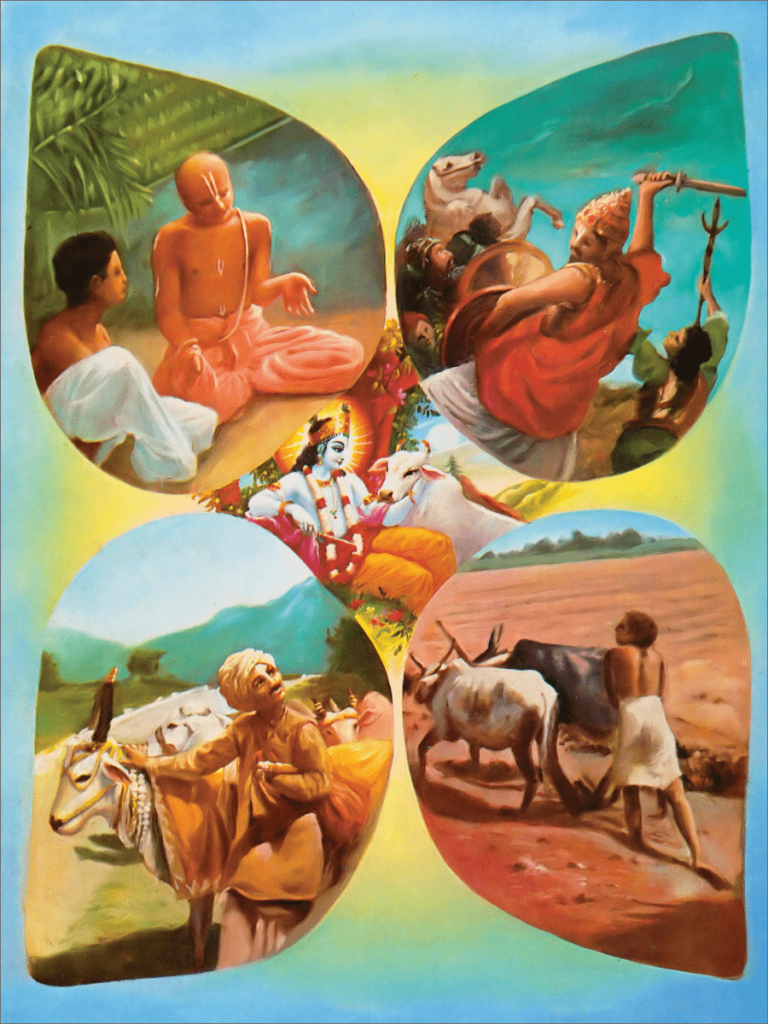
Image Courtesy: https://asitis.com/
In this regard, Lord Krishna states in the Bhagavad Gita:
The wise, engaged in devotional service, take refuge in the Lord, and free themselves from the cycle of birth and death by renouncing the fruits of action in the material world. In this way they can attain that state beyond all miseries.
Bhagavad Gita 2.51
Srila A.C. Bhaktivedanta Swami writes in his commentary on this verse:
“Owing to ignorance, one does not know that this material world is a miserable place where there are dangers at every step. Out of ignorance only, less intelligent persons try to adjust to the situation by fruitive activities, thinking that resultant actions will make them happy. They do not know that no kind of material body anywhere within the universe can give life without miseries. The miseries of life, namely birth, death, old age and diseases, are present everywhere within the material world. But one who understands his real constitutional position as the eternal servitor of the Lord, and thus knows the position of the Personality of Godhead, engages himself in the transcendental loving service of the Lord. Consequently he becomes qualified to enter into the Vaikuntha planets, where there is neither material, miserable life, nor the influence of time and death.”
In another verse of the Bhagavad Gita, Lord Krishna further explains how one can attain freedom from karmic reactions even while continuing to work in this material world.
Work done as a sacrifice for Vishnu has to be performed, otherwise work
Bhagavad Gita 3.9
binds one to this material world. Therefore, 0 son of Kunti, perform your
prescribed duties for His satisfaction, and in that way you will always
remain unattached and free from bondage.
So, one who works for the pleasure of God is never bound by the material laws, and he transcends the cycle of karmic reactions as a result, attains liberation from material bondage.
Therefore, without being attached to the fruits of activities, one should
Bhagavad Gita 3.19
act as a matter of duty; for by working without attachment, one attains
the Supreme.
Srila Bhaktivedanta Swami writes in his purports of this verse:
“A person, therefore, acting for Krishna, or in Krishna consciousness, under proper guidance and without attachment to the result of the work, is certainly making progress toward the supreme goal of life.”
One can get guidance on working for God without attachment from a bonafide spiritual master coming in a line of disciplic succession. If you want to know how to find a spiritual master, you can watch this video of Jagad Guru Siddhaswarupananda Paramahamsa. In this video, Jagad Guru clearly explains the characteristics of a bona-fide guru and how to find such a person.
If you have any further questions please ask in the comments. We will try to answer in future posts or in the comment section.
Thank you for your time!

 LetItGrow.org